BS 1387 Hot-dip galvanized steel pipe refers to welded or seamless steel pipe that complies with British Standard BS 1387 and has been hot-dip galvanized. It is suitable for water, gas, and air transportation.
BS 1387 Hot-Dip Galvanized Steel Pipe Standard Status:
While it has been superseded by European standards such as EN 10255, it is still widely used and referenced in many older systems and specific regions. When replacing old pipes, it is important to measure the outside diameter to confirm the specification; otherwise, the threaded connection may not be tight enough, leading to leaks.
Galvanizing Process:
Hot-dip galvanizing involves immersing clean steel pipe in a bath of molten zinc at approximately 450°C, forming a dense layer of zinc-iron alloy and pure zinc on the surface. The zinc layer acts as a sacrificial protective layer; even if the surface is scratched, the zinc will rust before the iron, thus protecting the pipe itself. The zinc coating provides corrosion protection, extending the service life of the pipe, especially in outdoor or harsh environments.
Key Features: Threaded ends facilitate connection with threaded fittings.
Common Names: Often referred to in the market as "water and gas pipe" or "galvanized steel pipe."
Types and Grades:
Pipe Standard: BS 1387
Pipes are categorized into three types based on wall thickness:
Light: Thinner wall thickness, used for less demanding applications, such as indoor water pipes.
Medium: Standard wall thickness, the most common type, suitable for general water, gas, and air systems.
Thick: Thicker wall thickness, suitable for applications requiring greater strength and durability.
Coating Grades:
The standard specifies different zinc coating thicknesses, the most common of which are:
Class B: Lightly galvanized (zinc coating weight approximately ≥375 g/m²)
Class C: Heavy galvanized (zinc coating weight approximately ≥475 g/m²), providing longer corrosion protection life.
Common BS 1387 Hot-Dip Galvanized Steel Pipe Sizes:
1/4" - 4" (hot-dip galvanized).
Common Outer Diameters: 21.4mm - 114.3mm
Common Wall Thicknesses: 2.35mm - 5.90mm
Process Type: Seamless Pipe or Welded Pipe
Shapes: Round, square, rectangular, etc.
Lengths: 5.5m, 5.8m, 6m, 11.8m, 12m, etc. Other lengths available upon request.
Standards: ASTM, DIN, JIS, BS, GB
Pipe End Treatment:
Pipes can be supplied with plain, threaded, or socket ends to accommodate various connection methods.
Threaded Ends:
Pipe ends are typically machined with standard tapered pipe threads (such as BS 21, now ISO 7-1), facilitating installation with threaded fittings such as elbows, tees, and joints. This eliminates the need for welding and facilitates installation.
Strict Testing Requirements:
The standard requires that each pipe undergo a hydrostatic test to ensure its leak-tightness and strength.
Flattening and flaring tests are also required to verify workmanship and ductility.
Round Galvanized Steel Tube Specification:
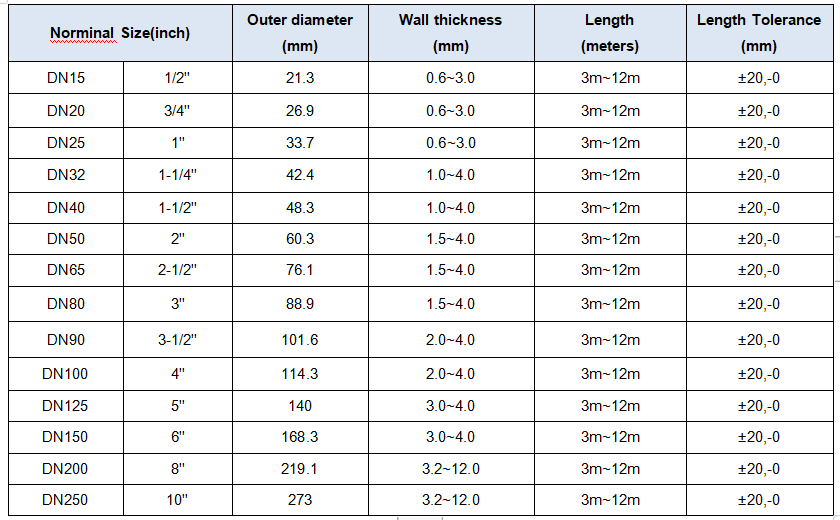
Square Galvanized Steel Tube Specification: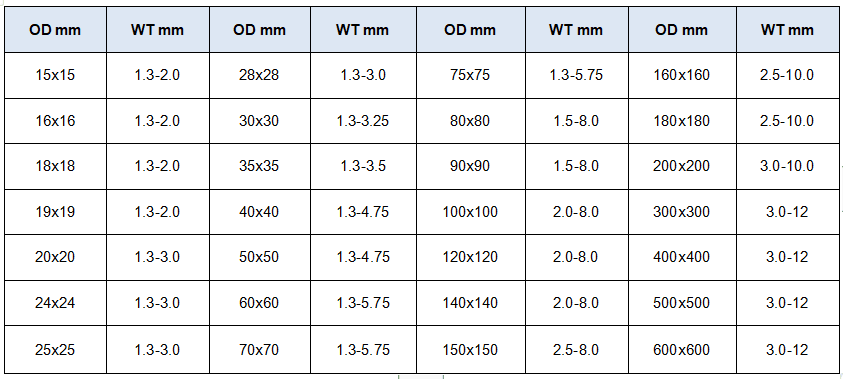
Rectangular Galvanized Steel Tube Specification: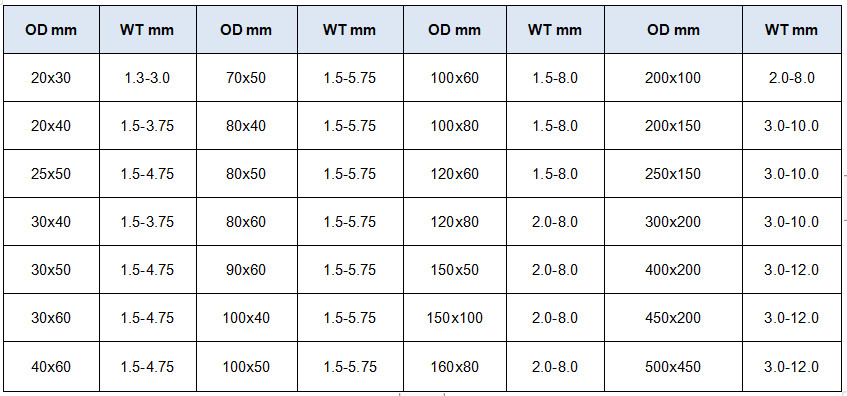
Key Features of BS 1387 Hot-Dip Galvanized Steel Pipe This British Standard applies to welded, seamless, and threaded steel pipes, covering areas such as fluid transportation pipelines, building structures, and industrial equipment. It ensures the safety and durability of steel pipes in applications such as pressure vessels and water, gas, and steam transportation.
